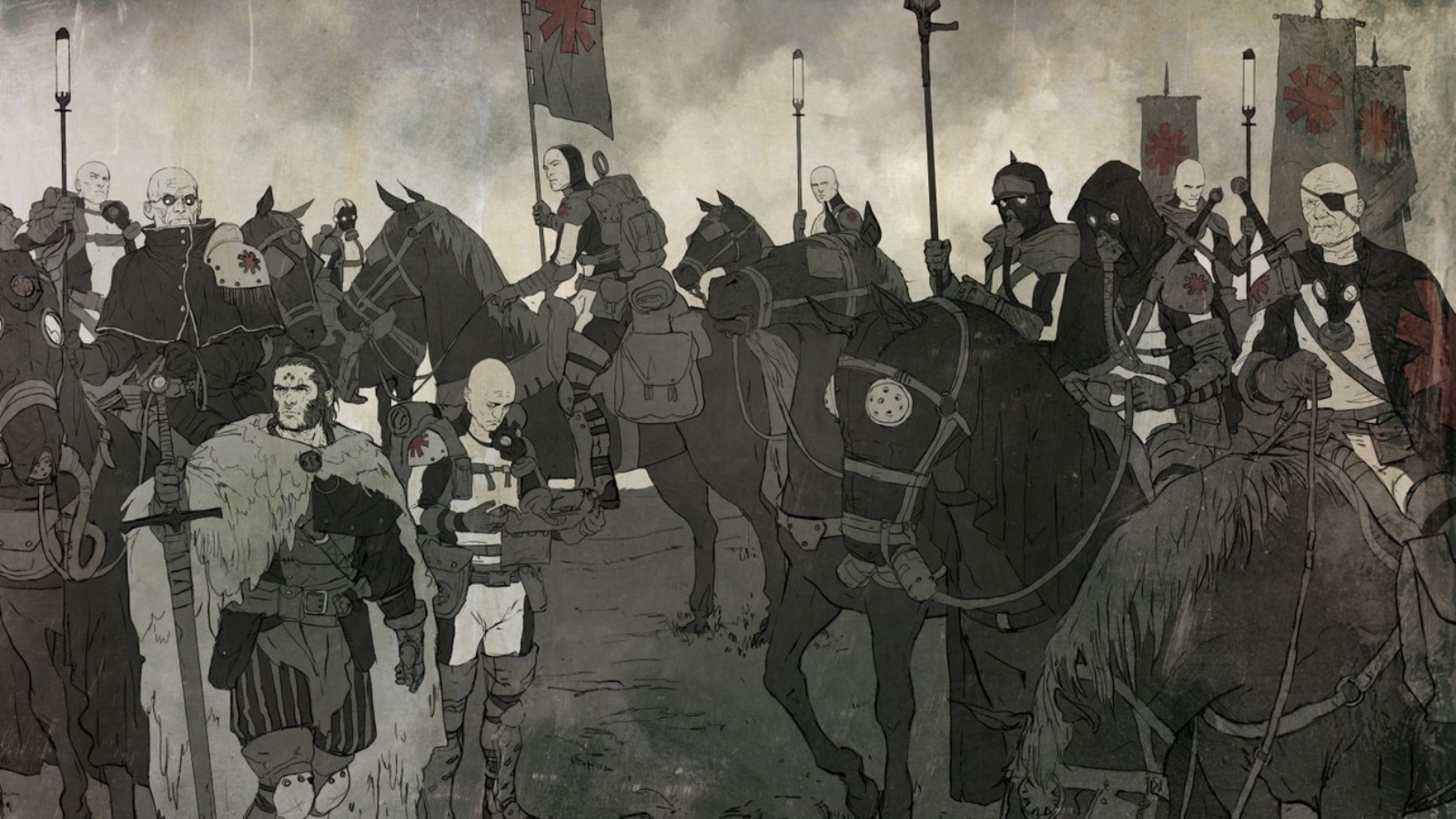
Campaign Diary 1 - Setting Up
By Herugrim
Intro
This guest post from Andreas Holzner (known as Herugrim on the Degenesis Discord) is the first of many. He’s firing up a new campaign online, and is taking us along for the ride. One of the things I appreciate about these writeups is how they provide context. We all run and play Degenesis differently, and knowing the why before the how is important. Whether you run your campaign the way he does or not, you’re sure to pick up ideas. I certainly did.
This post covers everything before campaign kick-off. Future posts will cover the actions in the campaign and provide insights into how Andi is running things as the campaign progresses.
Session 0
Before we start this campaign, there are some things we need to discuss so I usually schedule a Session 0 where we take some time to get to know each other, talk about expectations, character concepts, etc. But, as is probably obvious to the advanced GMs among you, even before that I have taken some measures to get things on the road. Let’s start at the very beginning before I had even selected the players for the game.
Aligning Expectations
I explicitly advertised the campaign as set in/around the Clan Wars. The setting is Justitian and the Protectorate with maybe some expeditions beyond the borders but there will be no globe trotting. Campaign and story are focused on the Protectorate’s struggle for survival and the PCs will have lots of opportunities to shape both the war and the future of the Protectorate.
We will focus on themes like civilization vs barbarity, security vs freedom, order vs chaos, how the road to hell is paved with good intentions and the nature and societies of the Cults. I am also providing guidance on available character options as well as information about my GMing style upfront.
Why is it important to frontload these things before a Session 0?
We are setting expectations. This way players get a feeling for the direction the campaign will go. I don’t want to waste anyone’s time, so the clearer I am before the game, the less likely it is for someone who doesn’t vibe with some elements to apply for a player slot.
Of course, this limits the pool of available players, but I’d rather run the game with people who are excited about the specific gaming experience I am offering than with someone who is in it just because they have nothing else to play at the time. Players who will then participate in Session 0 know already (roughly at least) what they are getting into. It saves players who like tactical battle maps and tons of loot a lot of time and frustration as they know I won’t be catering to these desires in my games.
Instead I focus on dramatic storytelling, cinematic descriptions and emotional scenes. Both playstyles are legitimate but the friction between them will, at least in my experience, cause lots of problems and headaches we can easily avoid by setting the right expectations.
Dialing in Character Options
For the available character options, I decided that since Justitian’s survival is the focus, I am limiting the available Cults and Clans to those that stand “loyal” to the Protectorate. The Clan Wars will demand everything from the characters and mercenaries will usually not cut it. There is only so much you’re willing to do for money, and the prospect of wild barbarians trying to literally eat you can be a difficult hurdle to overcome with only money, especially if it looks like Justitian could lose the war.
Characters loyal to the Protectorate will also have a wide net of relationships that form part of the motivational foundation that will hopefully be a light in the darkness when things get really bad. A character’s relatives in Hybrispania are obviously of no use to me as a GM in Borca. In addition to that, Cult selection is limited in this campaign as well.
Palers, African Cults, Apocalyptics and some Clans are not available. Palers are hunted by the Chroniclers and the Apocalyptics are migratory birds. I don’t want to deal with constant conflicts between a Judge and an Apocalyptic character. We all know the Paladin vs Rogue trope. This just isn’t the campaign to explore these themes. Other, more broadly structured, Justitian campaigns could very well serve as a playing ground to engage with these Cults.
Now with all of that out of the way, I select players from the applications and from the pool of people I already know of who have reacted excitedly to my campaign pitch. We meet for Session 0.
Seeing What the Players Want
The players all have experience in TTRPG role playing but two of them have little to no experience with the setting. The other three are setting veterans, one of them has even written published adventures in the German Mephisto magazine during the 1E times. We are a mixed group of five men (me included) and one woman.
During Session 0 we start with introductions so people can get to know each other and their history with the hobby. I recapitulate the campaign pitch with the themes and styles I want to focus on. Following that we talk about exectations from the player side. What do they hope to get out of the game?
I go through these steps to make sure we are aligned in our vision and have compatible playstyles, because sometimes players still apply to games they do not fit in. Hearing the players describe playstyle preferences or hopes for plot or theme elements of the campaign in their own words is a good way to get a feeling for how well they fit. It also gives them an opportunity to express preferences which, to me, is quite helpful in getting to know these players quickly. Keep in mind, none of these things are bulletproof, but they are quite successful in ensuring everyone is on the same page, at least in my experience.
Using Safety Tools
Then we talk about Safety Tools. Yes, I know SMV’s and Marko’s stance on the topic. Obviously, I disagree with them as does a big part of the TTRPG scene. It’s not 1999 anymore. Our hobby has changed as has society. You don’t have to use them at your table but I strongly recommend them. Why?
Because if I am going to confront my players with some of the extreme and horrific elements that come along with the concept of a war campaign, I want to be sure I don’t accidentally touch upon a very personal traumatic experience or a phobia one of them might have. We are here to play and tell a story and have fun. None of these things should come at the expense of a player absolutely hating a moment during the game because of a personal experience the group didn’t know to avoid.
Safety tools to me are a ritualized reminder to talk about potential themes or story elements that can be problematic but also provide an opportunity for someone to mention they have a trigger, like a snake or spider phobia. It can be as simple as “Anyone got any topics we should avoid?” Personally, I use Lines and Veils and the X-Card at my table and we do feedback rounds after the game to decompress, as things can get quite heavy. For example, I had a scene in a past dark fantasy campaign where a player character literally drowned her own son to try to break him free from a black magic curse. Obviously, I don’t want to spring things like that onto people without setting the right expectations up front.
I don’t use these tools to police the game, but to make sure people are comfortable at my table. In the past, many people played with their friends at the table and they knew what everyone there liked (or didn’t). If a player just became a parent, the way they engage with the topic of child death can drastically change. Some people have experiences with abuse and just don’t want to engage with that in the game. I just want to avoid stumbling into something like that during the game if I can just have a conversation about these things beforehand.
Keep in mind, I don’t know these players yet. I have no idea of their individual life stories. We are, metaphorically speaking, preparing a ship to travel on a dangerous voyage and into unknown waters as the campaign will be full of dark and terrible elements. By talking about our Lines and Veils I am basically preparing a map of our route and can mark passages where our ship simply cannot pass. There are sharp rocks in the water, regions with strange tides our ship is simply not equipped to traverse. If I want our voyage to be something the crew will remember fondly, I need to make sure my crew knows what they are getting into.
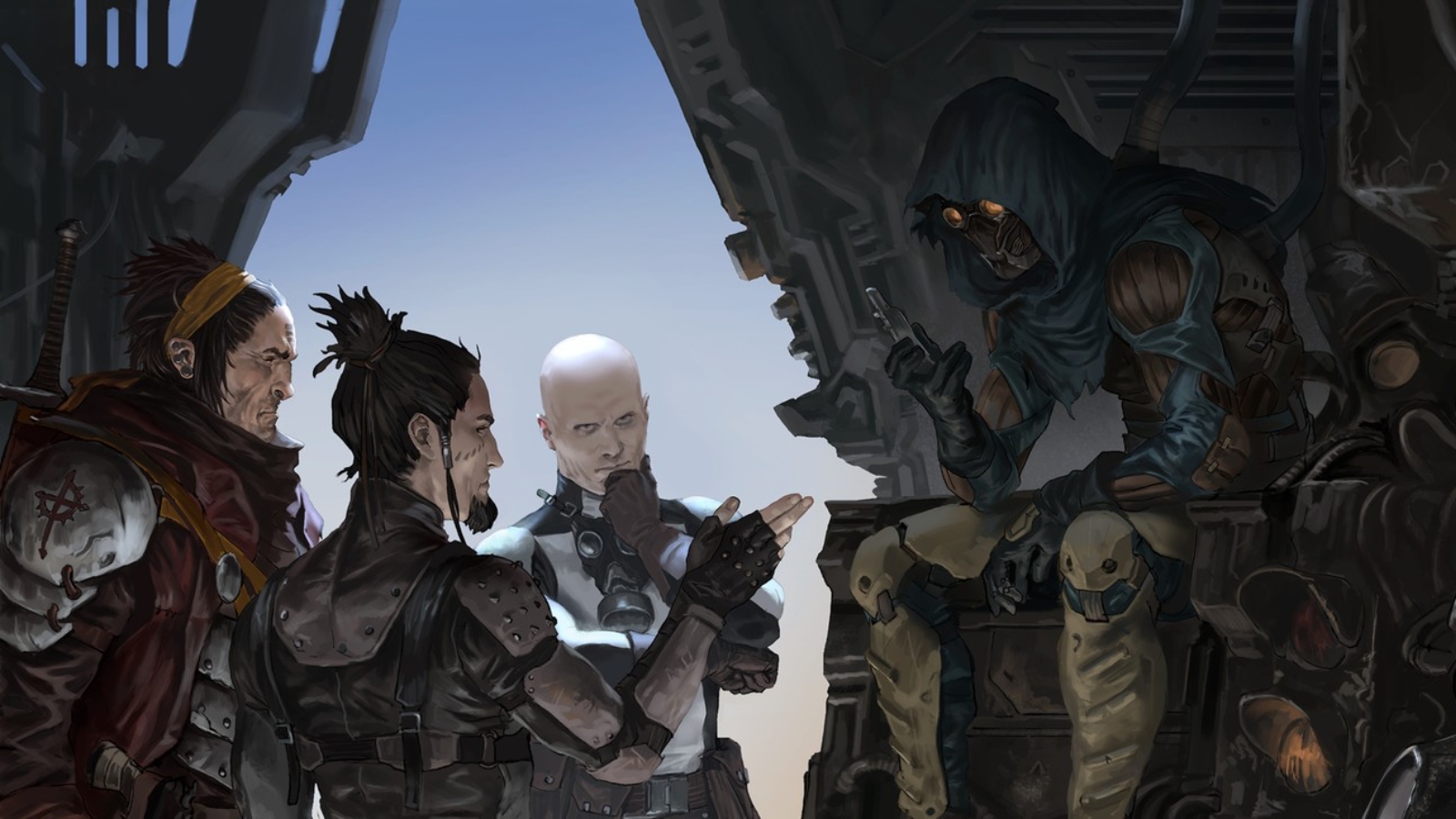
An example for using Lines and Veils is for someone to say “Hey, just know that I have a phobia of snakes.” It saves the whole group (and me or you as the GM) the terrible scenario of stumbling into an encounter with a giant snake and a player leaving the game because of that. If you’re a GM you probably know (or dread) the feeling of a player actually hating what is happening during a scene, when all the fun is sucked away. Safety Tools are just a helpful tool in mitigating the risk of such a scenario. They don’t guarantee you anything, but neither does a seatbelt guarantee your survival in the event of a car crash. But it does drastically improve your chances of survival.
Another useful aspect of using a tool like Lines and Veils is that it’s a trust exercise in disguise. When players are opening up about certain topics (reminder: these people usually don’t know each other in online gaming!), they build trust with each other. While nobody has to give any information about certain topics, people usually feel a little closer afterwards, which is excellent for the group mentality.
Without revealing too much about my players’ Lines and Veils, I’d say we settled on classic elements like no graphic depiction of sexual violence as Lines (topics we just won’t engage with as we don’t find them fun) and elements like torture scenes as Veils (they are part of this world, but the camera pans away).
Obviously, if someone had said that something like “War experiences” or “chemical warfare” is a line for them, then that person wouldn’t be compatible with this campaign. The campaign parameters are still the same; I am just taking note of things that are a little bit too personal for my players.
For our group we now know when to pay attention so we don’t ruin each other’s fun while we can safely engage with problematic themes other groups might deem off-limits. It even allows us to engage with dark themes more freely as we know that everyone is okay with that. This gives us a lot of freedom when we frame scenes that deal with extreme topics and will ultimately provide deeper and more intense roleplaying experiences.
Defining Characters
With this point finished, we start talking Characters. This topic usually takes the most time and we’ll shuffle around some options before the first session but we finally settle on the following characters:
- Albrecht, a young and bit naive City Judge who will have to reconcile with the realities of his Cult and with the nature of war.
- Hex, a Chronicler who usually gets sent out into the wasteland to repair Chronicler tech (the character isn’t designed as a classic mediator, as we wanted something more combat experienced without engaging with the whole “Shutter identity revelation” plot point)
- Henrik Waidmann, a young Spitalian, currently serving in the FG Prosthetics.
- Elena Berg-Stukov, a strong Water Master from the Stukov Clanners, tasked with the maintenance of water infrastructure (wells, pipelines, etc). Technically she is a Factotum (rank 2) of the Stukov clan.
- Levana, an Immaculate, who murdered her father/Abrami who tried to marry her after his old Saraeli died during childbirth. The character struggles a lot with the gendered hierarchy of her Cult.
For character ranks, I don’t keep too close to the book, and just use it for rough direction. That’s enough for me. If someone had asked to play a Preservist we would have found a way. For example, I allow characters not to fulfill the rank requirements if they are capable or have explanations for the promotion.
We also established some connections between the characters. Albrecht and Waidmann know each other from the Great Cleanse, when both served on the sidelines in support of Protectors, Hygienists and Preservists, and had their first experiences with mass violence.
Albrecht helped Levana avoid punishment when the Judges took over the investigations. It is unclear wether Albrecht’s mentor Balthasar Lannewehr, a walrus-bearded man with a combover and a reputation for being a fierce Protector, knows that Albrecht covered for Levana or if he just didn’t care enough.
Elena and Levana know each other as Elena was tasked to supervise the construction of a new bath house in the Jehammedan Quarter and the two women became friends afterwards.
Levana and Waidmann know each other slightly, as Waidmann was part of the group that came to collect the dead from the Jehammedan Quarter.
As Hex was a last minute change (the player had originally planned to play a Hellvetic but that didn’t feel right), there aren’t any connections to Hex as of the start of the campaign, something we will have to add in later.
With the characters finished, we conclude the Session - or rather Phase 0 just shortly before the first session!
Campaign Prep
We have our characters and we know the pitch. But what do I actually want to achieve with this campaign? What stories, experiences and challenges do I want to explore with my players?
My GMing style is quite improv-heavy and I prefer the freedom and the rush of weaving complex tales just by improvisation. It allows me to ”play to find out what happens”. Some of you might recognize this mantra from Powered by the Apocalypse, a whole ecosystem of indie TTRPG games that were quite influential on my style.
As such I don’t really do session to session prep. No plan survives contact with the players anyway. This works better, the more I know the setting. However, for this campaign there is some planning, housekeeping and preparation I have to do — most importantly timelines, themes and NPCs. It also helps me figuring out a rough structure for different arcs and pacing elements.
So, where do we start? Let’s set the big picture first.
War is scary. It’s obviously terrifying for the soldier on the front lines, but it also shatters the routines of ordinary day to day life at home. Justitian will shake under the forces that threaten to rip it apart and it will only survive if the Cults manage to put aside their differences. If you have read the two Justitian books, you know that is far from being guaranteed. I want the PCs to be the tip on the scale, to be trailblazers for a new future that comes after — if there is one.
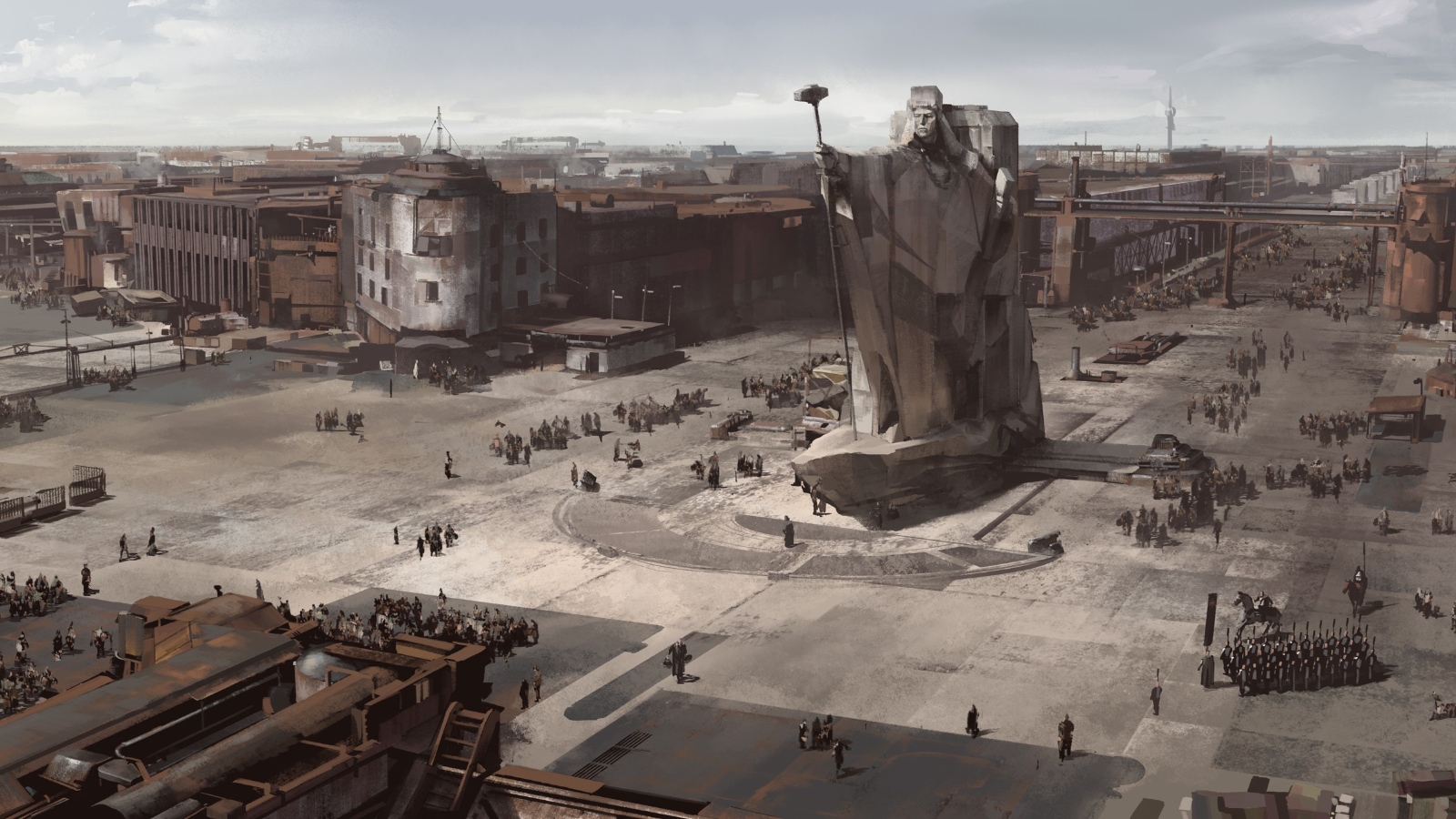
Our game begins in March 2596. The Justitian books are set in 2598. That gives me roughly 2 years to establish Justitian and the Protectorate, create relationships and allow the players to get familiar with the setting before the Clan Wars really start to escalate and threaten the established order.
Sketching Campaign Arcs
For this, I envision these rough arcs:
Arc 1 serves as an introduction to Justitian and the Protectorate. We spend time with core NPCs, establish important relationships, and allow the players to get a feeling for the setting and their Cults. Justitian is strong and so are the Cults. And they let everyone know how strong they are.
This (and Arc 2) is the phase where I am sowing some seeds that we’ll explore and reveal later. While there is hardship, moments of peace, family, and happiness prevail. The privileges of civilization are all around the characters.
Arc 2 is a wall of dark clouds, roaring with far away thunder. The threat of the clans becomes a real concern and the characters witness the cracks in the facade. Justitian isn’t as safe as it tries to portray itself. Uncertainty and insecurity rises but the Cults hold the line confidently. The Clans start their attacks on the frontline. Wetzlar falls. Other settlements follow in the weeks and months afterwards.
Arc 3 marks the beginning of war — the events of Black Atlantic happen. Thousands of refugees arrive at the Frankan border of the Protectorate. At the same time, the Clans advance. It’s impossible to deny the reality of the moment: The Clan Wars have breached the borders of the Protectorate, and worse, the Clans are gaining ground rapidly. Their tactics are unusually clever and sophisticated.
Some parts of the Cults start realizing that Justitian might actually lose this war. Factions within the Cults are starting to prepare themselves. Some parts of Justitian reach out for allies, others plan to use the time of turmoil to take control. Whether Justitian stands alone depends in part on the PCs’ actions. Life gets worse by the day. Amidst the rising anxiety, dangerous secrets are uncovered.
Arc 4 is hell on earth. Daily life as the PCs experienced it in Arc 1 is but a distant memory. Desperation grows and so does the willingness to do unspeakable things. Cults fracture and break apart like an old tree worn down by the summer storms, revealing a rotten core. Others reach out and grasp another’s hands as brothers in arms. Will it be enough? Or will old wounds and treachery brake the spell of civilization?
Hunger and disease rule the streets and the grass plains to the south. Fighting has come to the city. Many lie there in the red dust “with upturned faces, sleeping the last sleep, some mutilated and frightful, some wretched, fallen, bathed in blood, survivors still and unwilling witnesses of the rage” of Justitian.
But what is Justitian worth? Nothing? Everything? In this moment, the enemy unveils who they truly are. They are now at the height of their power. Judgement Day has come for Justitian. Don’t they understand? This is divine punishment. But pride comes before the fall.
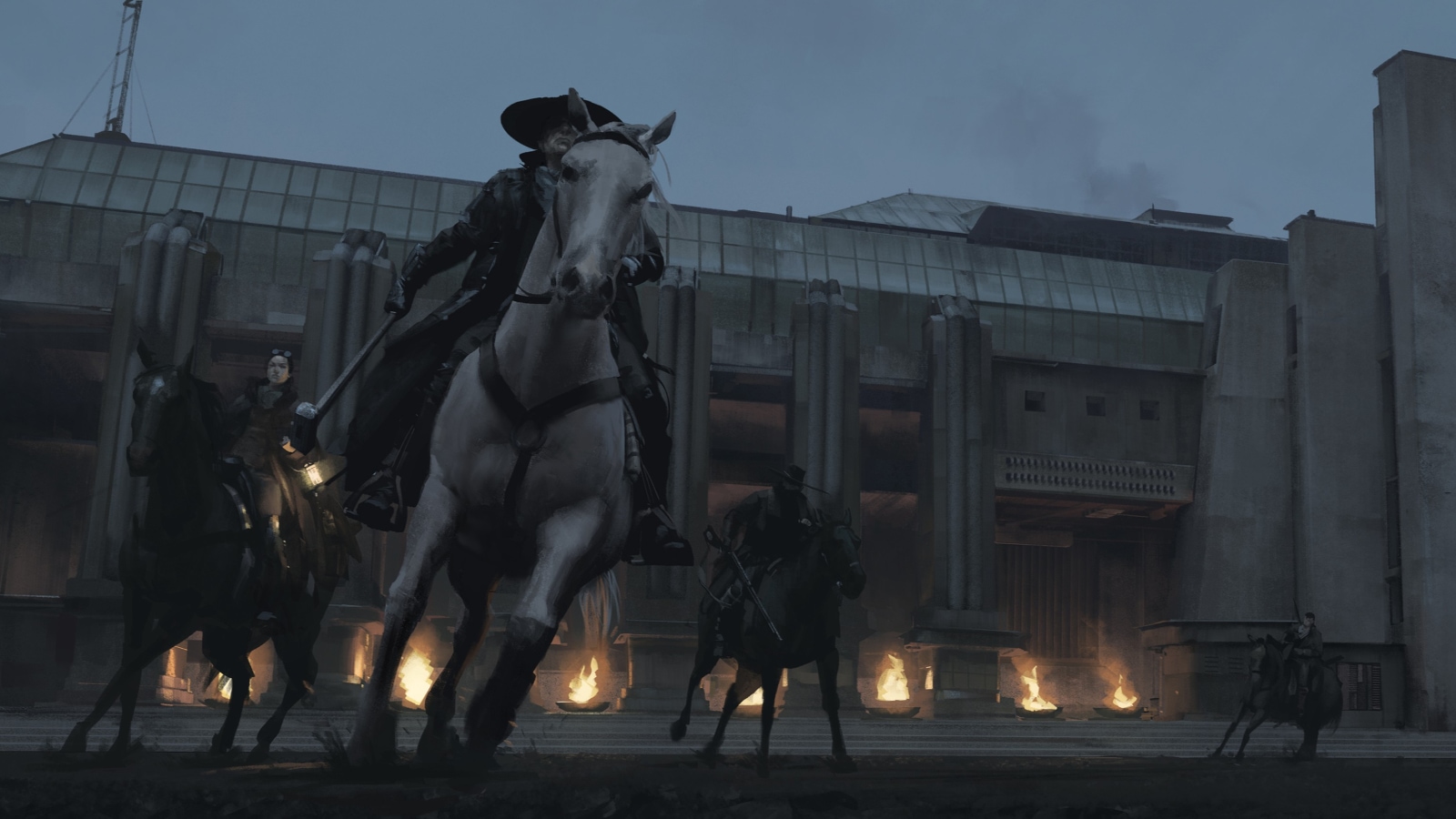
Arc 5 is about the turning of the tide. In the darkness, the characters and their allies are the light that the people rally around. Preparations pay off. There is a path to victory. Grim determination hangs in the air. The characters are the tip of the spear but the enemy is strong.
“Remember Falberg, there will be days of war. But there will come a day when you have to sacrifice… EVERYTHING.”
Arc 6 — rebuild, renew. This is a sort of outro and a glimpse into the future. The war is over, or at least not a hot war anymore, but the world is in ruins. Do the people rebuild, and if so, how? Who takes control? What kind of society rises from the ashes? What the PCs did during this campaign heavily influences what rises from the ruins.
This is outline is just that — an outline. It’s a north star to guide me and to give me a rough orientation on which themes to mainly focus on.
Definining My GMing Style
There are still some questions left to for me to answer.
While I mentioned that I use a cinematic approach when GMing, just saying that doesn’t actually mean anything. For example, some people call it cinematic when they just focus on the fiction. Yes, I do that, but I am also using “cinematic” in a more literal sense. At least in some German communities people distinguish between cinematic (cinematisch) and cineastic (cineastisch, as in the art of filmmaking). Is there a similar distinction in English circles? Let me know in the Degenesis Discord, please.
Okay, so what does running the game in a “cinematic” way actually mean for this campaign? Of course, it means to focus on the fiction. We’re not gonna get bogged down in rules and we’ll keep things moving and focused on the atmosphere, the scene, the characters, the relationships, etc.
The second aspect is about what I mentioned at the beginning, that there were some questions to answer. Or rather, there are some decisions to make.
As a GM, I am taking the role of a director, and my players are the actors (which is usually why I prefer players who use a more “acting” kind of playstyle), so I need to decide how I actually want to direct this campaign. This means how exactly do I want to use my narration?
For example, in a past campaign I ran, we played MASKS, a Powered by the Apocalypse system about teenage comic book superheroes. Conforming to the genre, I narrated and described every session, every scene, every moment as though we as a reader were flipping through an actual comic book. Cross page panels, close ups, voice bubbles that go across panel borders, close-up panels with heightened expressions — you get the idea. Using the genre to help guide your narration is an incredible tool for verisimilitude and just elevates the experience a lot. Use the genre to your advantage.
As this is a war campaign for an adult audience, taking inspiration from HBO and their various programs seems like a fitting idea. Many of their series make excellent use of cold opens, and I like that idea. It gets us immediately into the game and it also allows us to focus on a specific scene that might otherwise be a little bit difficult to get to, especially if we’re playing moment to moment.
Aside from cold opens, I really like flashbacks because they often provide more insight into some topics or can be used to reframe something we didn’t think enough about or just took for granted.
For this campaign, I think using cold open flashbacks to flesh out the characters’ relationships to NPCs and to their Cults could be a really cool way to start each session. At least Arc 1 seems like a good fit for that. After that we could use the cold opens in other ways. I have some ideas for that, but we’ll talk about those one we transition into Arc 2 (or I get bored of the backstory flashbacks, lol).
Okay, we have our intro. Actually, not quite. This campaign could go for a while and a lot of things might happen. Life can be busy but I need everyone focused. Before we start with the cold opens, one player summarizes what happened before. In addition to that, one of them has to write a session synopsis. It can always be the same player or they rotate the responsibility.
To be honest I don’t really care how they organize it, I just want to make sure they have a summary. Bullet points for the campaign diary are totally fine. If someone wants to frame it through the perspective of a character’s diary, that is also cool. The main point is that we need a summary that we can use to get everyone up to speed. Then we’ll start the cold opens.
Thinking About Narration
I also want to spend some time to think about how I am going to use my narration to frame a scene “in camera”. For this campaign, I think I’ll take some inspiration from the movie Citizen Kane and the directors who were heavily influenced by it. There is something fascinating about the techniques used to frame certain scenes. The mix between deep focus photography and wide angle lenses is perfect for heightening the dramatic tension of a scene, something we can perfectly well use in our descriptions. Think of the scene in the boarding house. This layering is just perfect for lore-heavy Degenesis, where we also have these multi-layered relationships between individual, Cult and context.
For action scenes, I think I’ll take inspiration from Mad Max: Fury Road. There is a certain momentum combined with very deliberate framing in this movie that I find highly stimulating for the theater of the mind. The center framing, the camera following the object’s movement, the stylized slow motion, the heightening of the environment, all fantasic points we can use as orientation for our narration.
The last genre I am taking a lot of inspiration from is the western. It’s practically baked into the setting (what is a post-post-apocalyptic setting if not a western by another name?). There is a certain tragedy and finality that comes with the western genre and I want to utilize western genre camera techniques to remind my players of these underlying mood elements at certain times. They also allow for an extraordinary sense of suspense when framing direct confrontations. The picturesque frames of The Searchers, the big close-up from Once Upon A Time In The West — you know what I am talking about.
In addition to all of that, I’ll use famous paintings and motifs as a blueprint to frame certain poses. This brings a certain evocative element to these moments.
We may revisit these decisions in the future and change some things around. I expect we’ll adjust some camera frame narrations when we move into Arc 3 or 4 territory, as I want the experience to be visceral and personal (so a lot of wide-eyed and terrified, spit dripping and blood coughing close-ups) as well as a sort of beauty-in-destruction hopelessness achieved by wide panoramas. But we’ll get there when we get there.
Ω